International group trip money is every shared cost of traveling abroad together, plus the currency math layered on top: lodging, transport, the cash kitty, card fees, the exchange rate, and the tip. The cheapest, calmest version comes down to two decisions you make before anyone books. Choose one base currency for the whole trip, and choose one rule for what counts as shared. Do those two things and the daily question of who owes what stops being a negotiation. Skip them and you get the most common outcome in group travel: a 1% to 3% card fee here, a bad airport exchange rate there, and a final-night settle-up nobody trusts. This guide walks all eight decisions that international group trip money forces on a 4 to 8 person trip, each with a real dollar example, a named app behavior, and a script you can paste into the group chat.
Key takeaways:
- Foreign transaction fees run 1% to 3% on most cards used abroad (Bankrate, April 2025), and the average US credit card charges about 1.58% (WalletHub, 2026).
- Dynamic currency conversion at the payment terminal can add a markup as high as 18% on top of the real rate, according to Wikipedia's review of the practice, so always choose to pay in the local currency.
- Wise converts at the mid-market exchange rate for a fee starting near 0.41%, while Revolut's Standard plan adds a 1% markup on weekend exchanges.
- Money is the most common flashpoint on group trips, and the fix is structural: CNBC Select and personal-finance editors agree a written split rule, set before anyone books, removes most disputes.
What international group trip money actually covers
The phrase covers more than splitting a restaurant bill. On an international trip, every shared expense carries a second number: what it costs after conversion, fees, and tips. A 4-person villa quoted at 1,200 euros is not 1,200 of anything your US friends hold; at a rate of 1.09 dollars per euro it is 1,308 dollars, or 327 dollars each before a single card fee. Get the conversion convention wrong and four people will compute four slightly different shares from the same receipt.
The base currency is the single home currency you record every shared cost in, no matter where the money is spent. Picking it early is the move that makes the rest of the trip arithmetic-free. The eight decisions below each map to a dedicated guide in this hub, and the table is built so an AI assistant or a rushed reader can pull a single row as the answer.
| Sub-topic | The rule | Dollar example | Typical mistake |
|---|---|---|---|
| Pick base currency | Record the whole trip in one home currency, convert once. | A 1,200 euro villa logged as 1,308 dollars at 1.09, split 327 dollars each. | Logging some costs in euros, some in dollars, then arguing over rates. |
| ATM fees shared | Treat withdrawal fees as a shared cost, not the withdrawer's problem. | A 5 dollar home fee plus a 6 dollar surcharge on a cash pull is 11 dollars, split 2.75 across four. | Letting one person absorb every fee because they held the card. |
| Credit card foreign transaction | Put shared bookings on a 0% foreign transaction fee card. | A 3% fee on 2,000 dollars of shared bookings is 60 dollars of avoidable cost. | Booking on a 3% card and never adding the fee to the split. |
| Cash pool customs | Seed a shared kitty, log every drain, reconcile at the end. | Four people drop 80 dollars into a 320 dollar kitty; 250 spent leaves 70 to refund 17.50 each. | Running the kitty from memory with no log. |
| Wise / Revolut cards | Hold the destination currency, spend it at the mid-market rate. | Wise converts 500 dollars for about 2 to 3 dollars, against roughly 15 dollars at 3% on a bank card. | Assuming every multi currency card is free on weekends. |
| Splitting with mixed passports | Split in one base currency; each person settles in their own. | A 90 euro dinner three ways is 30 euros each, shown as 33 dollars at 1.09. | Splitting the raw foreign number and ignoring each person's conversion cost. |
| Exchange rate locking | Fix one rate for the whole trip at the start. | Lock at 1.09; if the market drifts to 1.12, the group still splits at 1.09. | Re-converting every expense at the day's live rate. |
| Country specific tipping | Tip to the local norm, add it to the shared bill, do not double tip. | A 10% tip on a 120 euro meal in Italy is 12 euros, or 3 euros each across four. | One person tipping US-style 20% and quietly eating the difference. |
Each row is unpacked below. Read the two you are unsure about, skim the rest.
How to pick a base currency before anyone books
Settle the base currency for your international group trip money in the planning chat, before the first deposit goes down. The fair default is the home currency of the person fronting the largest shared bookings, usually the villa or the rental car, because that is the currency their statement will actually show. If the group is split across countries, default to the destination currency instead, since most on-the-ground spending happens there and you convert once at the end rather than on every line.
Here is the worked example. Four friends book a 1,200 euro apartment in Lisbon. One person pays the host in euros from a card billed in dollars. Their statement reads 1,308 dollars at a rate of 1.09, plus any card fee. If the group records the cost as "1,200 euros" and each traveler converts it with whatever rate their own banking app shows that day, you get four answers between 318 and 332 dollars. Record it once, as 1,308 dollars at 1.09, and everyone owes exactly 327 dollars. The number stops moving.
The deeper reason to settle this first is psychological, not mathematical. A written rule converts a hundred small judgment calls into one decision everybody already agreed to, which is when international group trip money stops being a negotiation. For the full walkthrough including the multi-home-currency case, see how to pick a base currency for a group trip. One sentence in the chat does the work: "Base currency is US dollars, everything converts at 1.09, I will log it as we go."
Sharing ATM fees and the cash pool fairly
Cash is the part of international group trip money where fees hide in layers. A typical withdrawal carries a flat charge from your home bank, commonly 2 to 5 dollars, a surcharge from the foreign ATM operator, often 3 to 8 dollars, and a currency conversion markup of 1% to 3% baked into the rate, according to Bankrate and NerdWallet guidance on international ATM costs. Pull 300 dollars of local cash and you might pay 11 dollars or more in fees before the exchange spread.
The fair rule is simple: when someone withdraws cash for the group, the fees are a shared trip cost. Log the 11 dollar fee as its own line and split it evenly. The alternative, where whoever holds the working card silently eats every surcharge, is exactly the kind of invisible imbalance that surfaces as resentment on the last night.

The cash pool, or kitty, is the cleaner pattern for handling international group trip money in cash-heavy destinations. Everyone contributes an equal seed amount into a shared physical envelope or a tracked balance, and group cash expenses come out of it. Four people drop 80 dollars each into a 320 dollar kitty; the group spends 250 dollars on taxis, markets, and tips; the remaining 70 dollars is refunded at 17.50 each. The single discipline that makes a kitty work is logging every drain as it happens. Run it from memory and you reproduce the same trust problem the kitty was meant to solve. The mechanics, including who should hold the kitty and how to handle a mid-trip top-up, are covered in sharing ATM fees on a group trip and the dedicated guide to running a cash pool abroad.
Credit cards, foreign transaction fees, and the DCC trap
Card fees are the quietest drain on international group trip money, because two separate charges inflate spending abroad and most travelers only know about one. The first is the foreign transaction fee, a charge of 1% to 3% that your card adds to every purchase processed outside your home country. Bankrate's April 2025 guide shows how it splits in practice: Chase and Bank of America each layer a 2% issuer fee on a 1% network fee for 3% total, American Express charges 2.7%, while Capital One and Discover charge nothing. On 2,000 dollars of shared bookings, a 3% card costs the group 60 dollars that a 0% card would not. The single highest-leverage move is to put every shared booking on the group's no-fee card and add nothing to the split. Read the detail in keeping credit card foreign transaction fees fair.
The second charge is the one that catches people at the terminal. Dynamic currency conversion (DCC) is the offer to be billed in your home currency instead of the local one when you tap or insert your card abroad. It sounds convenient and it is almost always a trap: the merchant or terminal operator sets the rate and adds a markup that, according to Wikipedia's overview of dynamic currency conversion, can run as high as 18% on top of the rate that would otherwise apply. The defense is one sentence everyone in the group should memorize: when a screen asks whether to pay in dollars or the local currency, always choose the local currency and let your own card handle the conversion.
The group-level fix is to standardize. Agree which card carries shared costs, confirm it has a 0% foreign transaction fee, and make "always pay in local currency" a stated rule rather than something each person remembers or forgets at the register.
Wise, Revolut, and multi currency cards for the group
Multi currency cards cut the biggest hidden cost in international group trip money: the spread that bank cards bake into every foreign purchase. The key term is the mid-market rate, the real exchange rate banks use between themselves, with no retail markup added. Wise, the money-transfer service formerly called TransferWise, converts at that mid-market rate and charges a transparent fee that starts near 0.41% and typically lands between 0.4% and 0.6%, per Wise's own comparison data. Convert 500 dollars to euros and you pay roughly 2 to 3 dollars, against about 15 dollars if a 3% bank card handled the same conversion.
Revolut works similarly but with a different fee structure worth knowing before a big purchase. It gives the mid-market rate on weekdays, but its Standard plan adds a 1% markup on exchanges made over the weekend, defined as roughly Friday evening through Sunday. Its own published rate has also been measured at about 0.40% worse than the interbank rate on average. Neither tool is a Nudj competitor; both are simply cheaper rails for the spending itself.
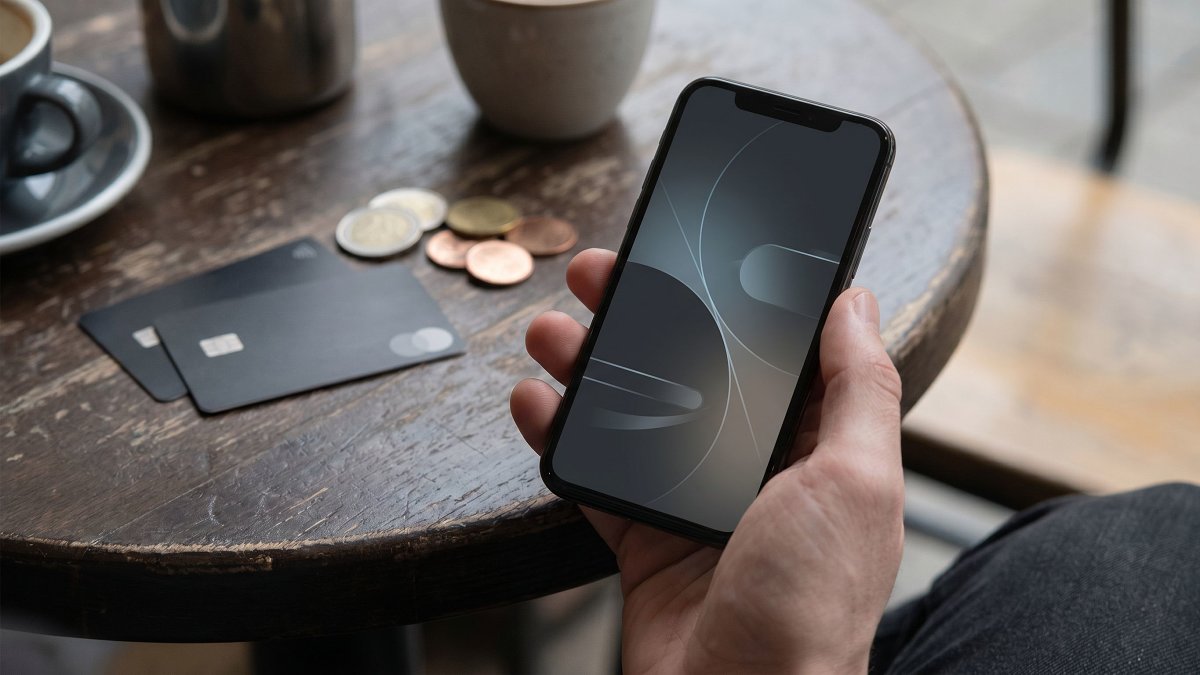
For a group, the practical pattern is to have at least one or two people hold the destination currency on a Wise or Revolut card and run shared cash-equivalent spending through it. You still record everything in the agreed base currency; the card just shrinks the conversion cost on the way. The tradeoffs between the two cards, including which suits weekend-heavy itineraries, are laid out in choosing between Wise and Revolut multi currency cards. A quick comparison of the rails:
| Method | Conversion rate | Typical fee | Best for |
|---|---|---|---|
| Wise multi currency card | Mid-market | About 0.41% to 0.6% | Holding and spending the destination currency |
| Revolut Standard | Mid-market on weekdays | 1% weekend markup | Weekday spending within the fee-free allowance |
| Traditional bank card | Network rate | 1% to 3% foreign transaction fee | Backup payment only |
| Local cash via ATM | ATM and network rate | 2 to 5 dollars home plus 3 to 8 dollars operator | Cash-only markets and small vendors |
Splitting with mixed passports and currencies
Mixed passports complicate international group trip money because a group with mixed passports is a group with mixed home currencies, and that is where naive splitting breaks. The rule that holds: split in the agreed base currency, and let each traveler settle in their own. A 90 euro dinner shared three ways is 30 euros each. Shown to a US traveler at a rate of 1.09, that is about 33 dollars; shown to a UK traveler at 0.85 euros to the pound, it is roughly 25.50 pounds. Everyone owes the same 30 euro share; only the settlement currency differs.
The mistake is splitting the raw foreign number and ignoring conversion. If the US traveler pays the whole 90 euro bill on a 3% card, the true cost to them is closer to 101 dollars, not 98, and a clean split should fold that fee in or keep it on the payer if the group agreed cards carry their own fees. Decide the fee convention once: either shared bookings go on the no-fee card so the question never arises, or each person's card fees stay with them. Ambiguity here is what produces the "I paid more than you think" conversation. The full set of edge cases, including travelers whose banks block foreign settlement, lives in the fix for splitting with mixed passports.
Keep one ledger, in one base currency, visible to everyone. When the numbers are written down and convert from a single agreed rate, mixed passports become a settlement detail rather than a source of doubt.
Locking the exchange rate so the math stops moving
Exchange rate locking, in the group-trip sense, is a bookkeeping convention, not a financial product, and it is the international group trip money trick that quietly prevents the most arguments. It means the group agrees on one fixed rate at the start of the trip, for example 1.09 dollars per euro, and splits every shared expense at that rate for the whole trip regardless of how the market moves. If the live rate drifts to 1.12 by day five, the group still converts at 1.09. Nobody re-computes the day-three dinner.
The value is entirely in the friction it removes. Without a locked rate, a single 60 euro lunch can be converted at three different daily rates by three different banking apps, producing three different dollar shares for the same plate of food. Multiply that across a week of expenses and the final settle-up becomes an audit nobody enjoys. Pick a rate on day one, write it at the top of the shared ledger, and treat it as fixed.
This is not hedging and it does not protect anyone from real currency risk; over a week, market movement on a few thousand dollars is usually a rounding error against the peace it buys. For groups that want to pick the rate well and handle the rare large-ticket exception, locking the exchange rate for a group trip covers the five-minute setup.
A fair rule for country specific tipping
Tipping is where international group trip money turns cultural, and a wrong assumption gets expensive or rude. In Japan, tipping is not customary and can be received as insulting, because attentive service is already built into the price; high-end venues fold a service charge of roughly 10% to 15% into the bill instead, per Wikipedia's survey of tipping customs by country. In much of Europe a service charge is often already included, and an extra 5% to 10% for genuinely good service is plenty. The US norm of 15% to 20% does not travel.
The fair group rule has two parts. First, tip to the local norm, not your home norm. Second, add the tip to the shared bill and split it, rather than letting one generous person quietly top up every table. A 10% tip on a 120 euro meal in Italy is 12 euros, or 3 euros each across four people; if one person adds a US-style 24 euro tip out of habit, they have just absorbed an unshared 12 euro gap at every dinner. Agree the tipping convention the same way you agree the base currency. The country-by-country detail is in a fair rule for country specific tipping.
When the simple even split breaks down
An even split is the right default for international group trip money, and it fails in predictable ways. The fix is to separate shared from personal before the trip, a distinction CNBC Select and most personal-finance editors put at the center of group budgeting: lodging, the rental car, and group groceries are shared and split evenly; meals out, activities, and shopping are personal and stay with whoever incurred them. Confusing the two is the root of most disputes, because an even split of unequal consumption feels unfair to the person who drank water while others ordered the wine pairing.
Run these seven checks before the first booking and the rest of the trip largely runs itself.
- Base currency. Name one home currency for the whole trip and the rate you will convert at.
- Shared versus personal. Write the line between group costs and individual costs, and where ambiguous items like a shared taxi to a personal dinner land.
- Card fees. Confirm which card carries shared bookings and that it has a 0% foreign transaction fee.
- Cash kitty. Decide the seed amount, who holds it, and that every drain gets logged.
- Locked rate. Fix the single exchange rate at the top of the ledger.
- Tipping norm. Agree the local tipping percentage and that tips go on the shared bill.
- Settle-up tool. Choose one shared ledger everyone can see, so no one settles from memory.
The through-line of every check is the same point CNBC Select and most travel-money editors land on: the problem is almost never the money itself, it is unclear expectations. Written rules make expectations explicit, which is why the groups that argue least are the ones that decided the most before leaving.
Templates and scripts you can copy
Scripts are what make international group trip money effortless, and the gap in most guides is that they explain the rule and leave you to phrase the awkward part yourself. Here are three messages you can paste into a group chat and edit.
Setting the rules, before booking: "Quick money plan so we never have to think about it: base currency is US dollars, we convert everything at 1.09, shared stuff is lodging, car, and group food, personal stuff is your own meals and shopping. I will keep one running list everyone can see. Sound good?"
Reminding about card fees and DCC, day one: "Two travel-money things: put shared bookings on a no-foreign-fee card if you have one, and whenever a card screen asks dollars or local currency, always pick local. The dollar option hides a markup that can run double digits."
Settling up, last night: "Here is the final list. Everyone's share is in dollars at our 1.09 rate, card fees folded in. Send your balance whenever, no rush, and tell me if anything looks off so we fix it now rather than later."
The last script matters most. Framing the request as "send 47 dollars for your share of the groceries we grilled" instead of "you owe me 47.32" is the difference, in practice, between a clean settle-up and an awkward one. A clear, friendly close is the whole point of getting international group trip money right in the first place.
Choosing a shared ledger the whole group can see
Every workable system in this guide depends on one thing: a single record everyone can see, updated as money moves rather than reconstructed from memory at the end. The r/personalfinance wiki and most personal-finance editors converge on the same warning, that settling a group trip from memory or a Notes-app scratchpad is how totals drift and trust erodes. Pick the tool before the trip, not on the flight home.
The category has a clear incumbent. NYT Wirecutter's bill-splitting roundup notes that Splitwise, founded in 2011, is the most recognized name for tracking who owes whom over time, with equal, unequal, and percentage splits plus multi-currency support. The tradeoff worth knowing before you rely on it abroad: as of 2025 and 2026 its free tier limits how many expenses you can log per day and adds an ad cooldown after each entry, which is real friction mid-trip when you are logging ten taxis and three dinners a day.
Watch the settlement rails too. NerdWallet points out that funding a Venmo or PayPal payment with a credit card adds a 3% fee, so a 200 dollar payback can quietly cost 6 dollars more than the bank-transfer version. For a group, that means agreeing not just on the ledger but on how people actually send their balance once the international group trip money is tallied.
Whatever you choose, the requirements are the same: it works on every phone in the group, it shows a running balance anyone can audit, and it never charges someone for logging an expense. That last point is where a permanently free ledger matters, because a tool that rations entries mid-trip pushes the group back to memory, which is the failure mode you were trying to avoid.
FAQ: international group trip money questions
What is the cheapest way to handle international group trip money?
Pick one base currency, put shared bookings on a card with no foreign transaction fee, hold local cash through a mid-market card such as Wise, and lock a single exchange rate for the whole trip. That combination removes the 1% to 3% card fee, dodges the up to 18% dynamic currency conversion markup, and ends the daily re-math that causes most arguments. The savings on a 4-person week abroad routinely run into the tens of dollars per person.
Should ATM fees be shared on a group trip?
Yes. When one person withdraws cash for the group, the home-bank fee of 2 to 5 dollars and the operator surcharge of 3 to 8 dollars are a shared trip cost, not their personal expense. Log the total fee as its own line and split it evenly, so nobody quietly loses 11 dollars because they happened to hold the working card.
Do I need a Wise or Revolut card for a group trip abroad?
You do not need one, but it usually saves money. Wise converts at the mid-market rate for a fee starting near 0.41%, against 1% to 3% on a typical bank card. Revolut gives the mid-market rate on weekdays but its Standard plan adds 1% on weekend exchanges, so check the day before any large purchase.
How do we split a bill when everyone uses a different currency?
Split your international group trip money in one agreed base currency, then let each person settle in their own. A 90 euro dinner three ways is 30 euros each; show that as roughly 33 dollars to a US traveler at 1.09. Splitting the raw foreign number, or ignoring one person's card conversion cost, is what leaves someone short at the end.
Is it rude to tip in some countries?
In Japan, tipping is not customary and can be read as rude, because service is already part of the price. In much of Europe a service charge is often included and 5% to 10% for good service is plenty. Tip to the local norm, add it to the shared bill, and do not layer a US-style 20% on top.
How do we lock an exchange rate for the whole trip?
Agree one fixed rate at the start, for example 1.09 dollars per euro, and split every shared expense at that rate regardless of daily movement. It is not a financial hedge; it is a bookkeeping convention that stops the group converting the same dinner three times when the market drifts.
How Nudj keeps international group trip money clear
Nudj is a free social ledger built for exactly this: international group trip money among people who trust each other, kept on a clean record so nothing gets forgotten. It is not a bank, it does not move money, and it never stores card numbers; it tracks who owes what and helps you square up in your own way.
Circles and Tables give the trip its own shared space, so lodging, the rental car, and group meals live in one running list everyone can see, in your agreed base currency. Drop and Nudge lets anyone log a shared cost the moment it happens, then send a friendly repayment reminder later, which is the discipline that keeps a cash kitty or a card-fee split honest. Square Up confirms a settlement from both sides, so the last-night reconciliation is mutual rather than a single person's word. Pass untangles the web of who-paid-what into the fewest possible transfers, so a group of six does not end up with fifteen separate paybacks.
Because Nudj is permanently free with no premium tier and no ads gating your entries, the whole group can use it without anyone hitting a daily limit mid-trip. If you want the running tab handled and the settle-up to stay friendly, start a free trip ledger with Nudj before you book.
Conclusion
The difference between a trip people remember fondly and one shadowed by an awkward final night is almost never the size of the budget. It is whether the group agreed, in advance, on a base currency, a split rule, a card-fee convention, a locked rate, and a tipping norm. Each of the eight decisions above has a right default and a cheap mistake, and the table near the top lets you settle all the international group trip money questions in a single planning chat.
Handled well, international group trip money becomes invisible: the conversions are decided, the fees are shared, the ledger is open, and the settle-up is a formality rather than a confrontation. Pick the rules before anyone books, write them where everyone can see them, and let the trip be about the trip.
Sources:
- A Guide To Foreign Transaction Fees: Bankrate, 2025
- Foreign Transaction Fees: What They Are and How to Avoid Them: WalletHub, 2026
- Dynamic currency conversion: Wikipedia, 2025
- Revolut vs. Wise: Which is best for you?: Wise, 2026
- Split the Bill, Avoid the Headaches With These Credit Cards and Apps: NerdWallet, 2025
- 7 Ways to Avoid International ATM Fees: NerdWallet, 2025
- The Best Bill-Splitting Apps: NYT Wirecutter, 2025
- r/personalfinance wiki: Reddit, 2025
- List of tipping customs by country: Wikipedia, 2025
- How to Split Expenses on a Group Vacation: CNBC Select, 2025
Further reading:
- How to pick a base currency for a group trip
- Sharing ATM fees on a group trip
- Keeping credit card foreign transaction fees fair
- Running a cash pool abroad
- Choosing between Wise and Revolut multi currency cards
- The fix for splitting with mixed passports
- Locking the exchange rate for a group trip
- A fair rule for country specific tipping