
Lending money to a friend is one of the most common financial decisions people never plan for. A friend texts at 11pm, dinner runs short, rent is tight this month, and suddenly you are deciding whether to lend money to friend you genuinely care about, with no contract, no bank, and no script. The honest answer: you can do this well, but the math is the easy part. In a 2025 LendingTree survey of 2,000 U.S. adults, 77% said they had lent money to a friend, and 32% did not get it back the last time. Most people will lend money to friend or family several times across a lifetime, usually without ever deciding how. This page is the pillar for Nudj's Lending Between Friends family. It maps the whole topic: the numbers, the etiquette, the nine sub-areas where it gets complicated, and the one rule of thumb you can use tonight.
Key takeaways:
- 77% of Americans have lent money to a friend, and 32% were not repaid on their last loan, according to LendingTree's 2025 Friends and Money Report.
- Before you lend money to friend or family, decide you can afford to lose it. AARP and Bankrate both call this the single habit that prevents most of the damage.
- The U.S. Internal Revenue Service (IRS) lets you make a zero-interest personal loan of $10,000 or less with no tax paperwork, under its small loan exception.
- A written note, even a two-line text, is the difference between a loan and a forgotten favor: the IRS treats undocumented transfers as gifts.
- Lending Between Friends splits into nine hubs, from sub-$50 dinner covers to cross-border loans, and this page links out to each one.
What counts as lending between friends, and what does not
Lending between friends is any transfer of money you expect back, made outside a bank, between people who trust each other. That definition is wider than most people think. It covers the obvious case, a friend asking to borrow $300 until payday, but it also covers the $24 you fronted for concert tickets, the utilities your roommate owes you, and the vacation deposit you put on your card for the group. The shared trait is informality. Nobody runs a credit check, nobody signs at a branch, and the paperwork, if it exists at all, is a text message.
What this page does not cover is formal credit. A bank loan, a credit card balance, a buy-now-pay-later plan, and a payday lender are all governed by contracts and consumer law. Lending between friends has none of that scaffolding, which is exactly why it feels lighter and exactly why it goes wrong more often. The line that matters most is the one between a loan and a gift. A loan is money you expect returned. A gift is money you have already let go of. The damage to friendships almost always happens in the fuzzy space where one person thinks it was a loan and the other has quietly filed it as a gift. Every time you lend money to friend or relative, you are placing a private bet on which of those two categories the other person is using.
There is also a middle category most guides skip: the deferred split. When you cover a group dinner and expect everyone to pay you back, you are not making a loan in the emotional sense, but mechanically you are: money you expect back, no bank, friends only. Treating deferred splits as a form of lending is what keeps them from quietly piling up into a real debt. The reason this pillar groups splits, covers, and outright loans under one roof is that they all run on the same engine and break in the same places.
This pillar is written for one reader: someone aged roughly 22 to 45 who is weighing whether to lend or borrow, has done it before without a system, and wants to stop guessing. If that is you, the rest of this page is a map. It explains where the numbers come from, why they get socially heavy, what the nine sub-topics are, and how to use a shared ledger like Nudj instead of memory. It does not tell you never to lend money to friend networks you trust; it tells you how to do it without the quiet accounting eroding the relationship.
The math layer: where the numbers come from
Every friend loan starts as a clean number and a clear direction: one person is owed, one person owes. A $46 dinner where you covered the table and three friends owe you $11.50 each is arithmetic a ten-year-old can do. The math layer is the part nobody actually struggles with. Splitting a bill evenly, splitting it by what each person ordered, or splitting a recurring cost like rent by room size are all solvable in seconds. Personal-finance guides, including NerdWallet's coverage of how to split bills, describe the same handful of approaches: an even split, a proportional split based on income or usage, and a rotating approach where people take turns covering.
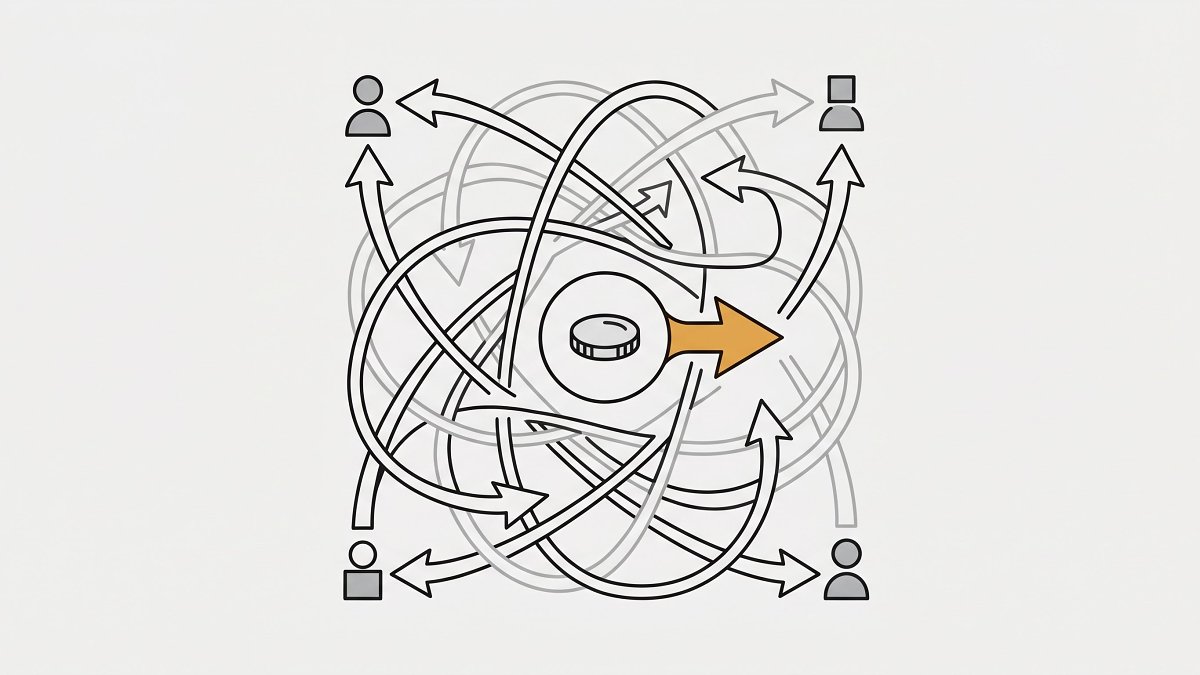
The math gets tangled only when it stacks. One dinner is simple. Six weeks of dinners, two group trips, a shared streaming subscription, and a concert run where different people fronted different amounts produce a web of small debts pointing in every direction. This is where debt simplification earns its name. As the Splitwise blog explains in its intro to debt simplification, the technique reorganizes who pays whom inside a group so the total number of payments needed to settle up drops, without changing the net amount anyone owes. If you owe Sam $20 and Sam owes Priya $20, the math can collapse to a single instruction: you pay Priya $20 directly. Three people, one payment instead of two.
The reason the math layer still matters, even though it is easy, is that errors here are slow poison. A $4 rounding gap on a split nobody recalculated, a tip nobody accounted for, a currency conversion done from memory: none of these feel worth a conversation, so the conversation never happens, and the gap sits there. When you lend money to friend groups repeatedly, the arithmetic has to be not just correct but visible, because an invisible correct number and an invisible wrong number look identical until someone gets annoyed.
Scale changes the stakes but not the arithmetic. A 2025 Bankrate Financial Taboos Survey found 70% of U.S. adults have lent money or paid a group expense expecting to be paid back. Informal loans between friends and relatives add up to an enormous sum in aggregate across the United States, even though each individual transfer is small. That mismatch is the whole problem: each individual loan feels too small to formalize, so almost nobody does, and the informality compounds. The math layer is solved. The next layer is not.
The manners layer: why simple math gets socially loaded
The math layer asks what is owed. The manners layer asks what it means that you are asking. This is the part the top search results consistently underplay. As BBC Worklife has reported, money between friends is primarily a relationship question, not an arithmetic one. The awkwardness does not come from the dollar figure. It comes from the unspoken signals attached to it: who has more, who is keeping score, whether asking is a sign of trust or a sign of trouble.
The data shows how heavy this layer is. In LendingTree's 2025 Friends and Money Report, 41% of people said they had experienced tension or disagreement with friends over money, 19% said a loan had negatively affected a friendship, and 36% said they had lost a friendship over money entirely. Bankrate's survey put the negative-consequence rate even higher: 55% of people who lent money reported a bad outcome, including 44% who lost money and 26% who damaged a relationship. When you lend money to friend networks you care about, you are not just risking the cash. You are risking the thing the cash was supposed to be smaller than.
There are three social forces that turn a clean number into a loaded one. The first is asymmetry of memory: the lender remembers the exact amount and the borrower remembers a rounded-down version, or forgets entirely. The second is status signaling: being asked can feel like being trusted, or like being treated as a bank, depending on tone and history. The third is the reciprocity clock: once money moves, both people start quietly tracking whether and when it comes back, and that tracking is itself a small tax on the friendship. None of these forces are solved by being better at math. They are solved by being explicit, early, and in writing, and that single thread runs through every hub below.
Notice that none of the three forces are about the borrower being dishonest. The default assumption in the surveys is good faith on both sides; the damage comes from ambiguity, not from theft. That is why the practical advice on this page is never "vet your friends harder." It is "remove the ambiguity before the money moves." A friend who knows the exact amount and the exact date has no room to drift, and a lender who wrote it down has no reason to stew. When you lend money to friend after friend over the years, the people change but the ambiguity is always the same enemy.
A tour of the nine hubs in lending between friends
Lending Between Friends is not one topic, it is nine, and each one has its own scripts, dollar ranges, and failure modes. This pillar links out to the hubs so you can go deep where you need to. Here is the lay of the land, in the order most people meet them. The thread that connects all nine is the same: every time you lend money to friend or relative, the safe version of the move depends on the size, the timeline, and whether there is a record.
Small short-term loans under $50
The highest-volume, lowest-stakes hub. Covering a friend's dinner, fronting a $15 cab, spotting someone for a coffee round. The risk per loan is tiny, but the frequency is high, so the failure mode is accumulation, not a single bad debt. Nobody loses a friendship over one $20 cover; people lose friendships over the eleventh uncounted one. This is the hub where most people lend money to friend most often, usually without noticing it is lending at all. The fix is a light, fast record and a shared norm about settling up. Start with the hub on small short-term loans under $50, which covers how to handle a small loan when you are covering dinner and the "I got this" approach done with a record instead of a memory.
Larger friend loans over $500
Low frequency, high stakes. A car repair, a deposit, a flight home for a family emergency. Here a two-line text is not enough. This hub deals with promissory notes, repayment schedules, and the honest conversation about what happens if the plan slips. The decision to lend money to friend at this size deserves a real pause, not a reflex. The 2025 LendingTree finding that 47% of people would not lend a best friend $500 lives in this hub: it is the threshold where most people's comfort runs out, and crossing it deliberately is very different from sliding across it by accident.
To charge interest or not
Most friend loans are interest-free, and for amounts at or under $10,000 the IRS small loan exception makes that the simplest path. Whether to charge interest at all is the question that makes people most uneasy when they lend money to friend rather than a stranger. This hub covers when interest actually makes sense, namely long repayment horizons, large sums, or replacing a loan the borrower would otherwise pay a bank double-digit rates for. It also covers the tax mechanics above $10,000, where the Applicable Federal Rate (AFR), the minimum interest rate the IRS publishes monthly, sets a floor below which the IRS imputes interest for you.
Tracking informal debts without drama
The hub this entire pillar leans on. It covers the systems, from a chat thread to a shared ledger, that replace memory with a record. Most of the etiquette problems elsewhere in the family are downstream of a tracking failure: you cannot send a calm reminder about a number you are no longer sure of. The round-numbers anchor script and a simple weekly cap for small loans both belong here.
Repayment etiquette and timing
When to send the first reminder, how to phrase it, and how to ask a second time without it becoming a confrontation. Most repayment problems are timing problems: the lender waits too long out of politeness, the unsaid balance grows heavier, and then the ask arrives carrying a month of accumulated frustration. The etiquette here is mostly about asking early and lightly so you never have to ask late and hard. When you lend money to friend who is not a natural planner, the gentle early reminder is a kindness, not a nag.
When friends do not pay back
The hard hub. What to do when a reminder, then a direct ask, then a repayment plan all fail. It covers the mental move of converting a balance to a gift so the resentment stops compounding, partial-repayment deals, and the point at which the friendship and the money have to be separated and handled on different tracks. Anyone who has chosen to lend money to friend more than a few times will eventually land here, and having a plan beats improvising.
Cross-border lending between friends
Friends increasingly live in different countries. This hub covers currency, transfer fees, exchange-rate timing, and the extra record-keeping that distance demands. A loan that was clean in one currency can quietly turn into a small dispute when it comes back in another, so the record has to capture the rate as well as the amount.
Friend versus family lending
The same money behaves differently across a family line. Family loans carry obligation, longer horizons, and a harder exit; friend loans carry choice and shorter clocks. This hub maps the differences so you do not apply family rules to a friend, or friend rules to family, both of which are common and both of which misfire. The instinct to lend money to friend is voluntary in a way the family version rarely is, and that difference should shape the terms.
Lending items, favors, and time
Not all lending is cash. A borrowed drill, a covered shift, a ride to the airport. This hub covers the non-money ledger, which runs on the same reciprocity clock and breaks in the same ways. People who would never forget a $40 loan will happily lose track of four favors, and the friendship feels the imbalance just the same.
Three scenarios that come up every week
Most friend lending is not dramatic. It is three or four small, repeating situations, and naming them makes them easy to handle. Here are worked examples with concrete numbers, the kind that show up in any given week.
Scenario one: the dinner cover. A group of four eats out, the bill is $124 including tip, and you put the whole thing on your card because the restaurant will not split it. Each friend owes you $31. The risk is not the $93 you are owed tonight; it is that two of them pay you back within the hour and two of them forget by the weekend, and you are left deciding whether $62 is worth a follow-up text. The fix is to log all three debts the moment you sign the check and send a single, friendly group note with the figure, so nobody has to remember and you do not have to chase. If you want the deeper playbook, see covering dinner with a small loan for a friend without the awkward pause.
Scenario two: the mid-size favor. A close friend's car needs a $400 repair and payday is ten days out. You can spare it. Before the money moves, you send one text: "Sending $400 now, you said you can pay it back by the 30th, that works for me." That text is the contract. It names the amount, names the date, and gives the borrower a clean target instead of a vague "whenever." Nate Towers, Director at Five Pathways Financial, told AARP that the most common mistake people make is expecting to get it back, so you also decide privately that if the 30th slips, you will ask once and not stew. Choosing to lend money to friend at this size is a real decision, and the text is what keeps it a decision instead of a hope.
Scenario three: the recurring split. You and two roommates share $180 of monthly utilities and one person's name is on every account. That person is effectively extending a $120 loan to the household every month until the others pay in. The failure mode here is silent drift: a missed month becomes two, and resentment builds before anyone says a word. The fix is a fixed settle-up date and a shared ledger both roommates can see, so the balance is never a surprise and the reminder is the system's job, not a person's. When you lend money to friend roommates this way, the record is doing the remembering your memory should not have to.
The most common mistakes when you lend money to friend
The mistakes are predictable, which is good news: a predictable mistake is a preventable one. Across the AARP, Bankrate, and LendingTree research, the same errors repeat. Here are the seven that cause the most damage, each with the fix.
- Lending more than you can afford to lose. The AARP guidance is blunt: never lend money you would need back. Before you lend money to friend or relative, ask whether losing the full amount this month would force you to change a bill you pay. If the answer is yes, the number is too high, no matter how much you want to help.
- Leaving the terms vague. "Pay me back whenever" is the conflict that personal-finance communities, including the r/personalfinance discussions on shared expenses, return to again and again. Vague terms guarantee mismatched expectations, because each person fills the blank with the version that suits them. Name an amount and a date.
- Skipping anything in writing. A two-line text is enough for small sums; a signed promissory note is right for large ones. The IRS will treat an undocumented transfer as a gift if you are audited, and your friend's memory will quietly do the same thing for free.
- Confusing a loan with a gift. Decide which it is before the money moves, and say so out loud. Half the friendship damage in the surveys comes from one person calling it a loan and the other hearing a gift, and that gap is invisible until repayment time.
- Never following up, then following up angry. Silence is not patience, it is delayed confrontation. A calm reminder on the agreed date is far easier on the friendship than a frustrated one a month later, when the money has had time to turn into a grievance.
- Ignoring the tax line on bigger loans. Below $10,000 the IRS small loan exception keeps things simple. Above it, a zero-interest loan can trigger imputed interest, so the AFR floor and a written note both start to matter in a way they did not at $50.
- Lending to fix a pattern. A one-time gap is a loan. A friend who needs the same loan every month has a budgeting problem that cash does not solve, and stepping in repeatedly can delay the fix. Bankrate's analysts suggest offering a different kind of help instead of becoming a recurring lender.
Do all seven fixes and you remove most of the risk before a single dollar moves. The reader who internalizes just this list is already ahead of the 55% of lenders in Bankrate's survey who reported a negative outcome, because every one of those outcomes traces back to one or more of these seven. When you lend money to friend circles with these guardrails in place, the worst case shrinks from "lost a friend" to "lost some money you had already decided you could lose."
Nudj versus pen and paper, a chat thread, or another app
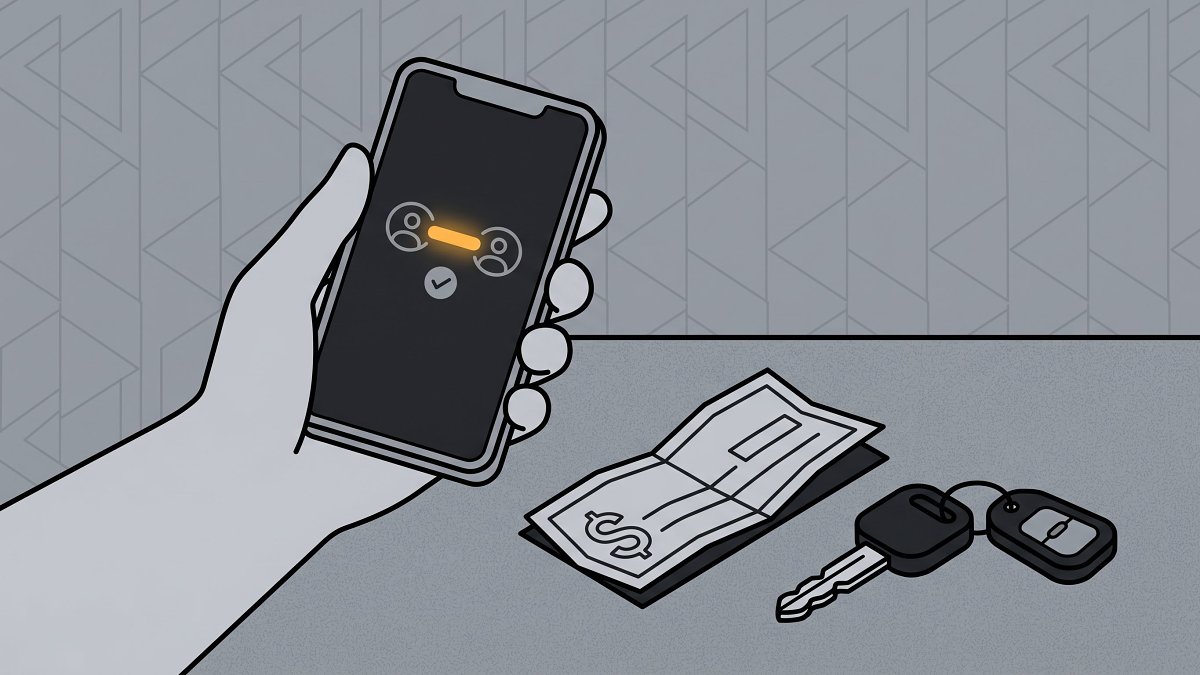
The right tool depends on how many debts are running at once. For a single one-off favor, a pen-and-paper note or a chat message genuinely works, and you do not need an app for it. The case for a shared ledger appears the moment debts run in parallel, point in different directions, or involve more than two people. A dedicated shared ledger beats a chat thread for any group that owes each other repeatedly, because nobody has to reconstruct the history by scrolling. Roundups such as NYT Wirecutter's review of bill-splitting apps exist precisely because that need is so common.
Four named apps handle the core mechanic of lending between friends in noticeably different ways. The table below compares them on the features that actually matter when you lend money to friend groups over time.
| Mechanic | Splitwise | Tricount by bunq | Settle Up | Nudj |
|---|---|---|---|---|
| Cost | Free tier with daily limits and ads, paid Pro plan | Free | Free, generous tier | 100% free, no premium tier, no ads |
| Debt simplification | Yes | Limited | Yes | Yes, called Pass |
| Built for recurring groups | Partial | Trip-focused | Group support | Yes, Circles and Tables, including poker tables |
| Polite repayment reminders | Notifications | Basic | Not foregrounded | Yes, the Drop and Nudge mechanic |
| Two-sided settlement confirmation | One-sided marking | One-sided | Yes | Yes, called Square Up |
| Bank or card connection | Optional integrations | Bank-owned, promotes its own card | None | None, ever, no money movement |
Each app has a real strength. Splitwise has been the category leader since 2011 and is feature-rich. Tricount is simple and popular across Europe. Settle Up offers a generous free tier and is a solid Android-first choice. Nudj's difference is narrower and deliberate: it is permanently free with no ads, it is built around the social rituals friends already use rather than feature depth, and it explicitly supports recurring contexts like poker tables and ongoing friend circles that one-off trip apps overlook. Nudj is not a bank and does not process payments, so the choice between these tools is about record-keeping, not about where your money lives. Whichever you pick, the job is the same: when you lend money to friend groups more than once, the tool exists so the number is never something anyone has to remember.
Three rules of thumb worth memorizing
You do not need to memorize this whole page. You need three rules. Each one defuses a different failure mode, and together they cover most of what goes wrong when you lend money to friend or family.
The first rule is the affordability test: only lend what you could lose this month without changing a bill you pay. This is the AARP and Bankrate consensus in one sentence, and it turns the scariest outcome, never being repaid, into something survivable. The second rule is write one line: the moment money moves, send a single text naming the amount and the expected date. That text is your contract, your reminder, and your proof that it was a loan and not a gift. The third rule is name the date, not the mood: never agree to "pay me back whenever," because a vague term is a guaranteed argument later, while a specific date gives the borrower a real target and gives you a clean, non-awkward moment to follow up.
If you only take one of the three, take the affordability test. It is the rule that protects the friendship even when the other two fail, because it means the money was never load-bearing for the relationship in the first place. Apply all three and you can lend money to friend or family without the transaction quietly rewriting how you feel about the person.
Where to go from here
This pillar is the map; the hubs are the territory. Once you have the basics here, the natural next step depends on the situation in front of you. If your lending is mostly small and frequent, go deep on the practical scripts inside the small-loans hub, including a low-stakes, low-paperwork rule for small loans and working out a small loan for a friend over Venmo instant. If a specific repayment is dragging, the repayment etiquette and the "when friends do not pay back" hubs are where the harder scripts live. If your money crosses a border or a family line, the cross-border and friend-versus-family hubs handle those edge cases directly. Whichever hub you start with, the goal is the same: to lend money to friend deliberately, with a record, instead of by reflex. The bibliography below collects every external source cited on this page, and the further-reading list points to the deeper guides.
FAQ: what people ask before they lend money to friend
These are the six questions that come up most often, answered in brief. Each connects to a deeper hub where the topic needs more room. They are the questions worth settling before you lend money to friend, not after.
Should you lend money to friend or just give the cash as a gift?
If repayment would change how you feel about the person, give it as a gift instead. AARP and Bankrate both advise treating any amount you cannot comfortably lose as a gift from the start. A true loan only works when you would be genuinely fine being repaid late, or not at all, and can say so out loud before the money moves.
How much money is too much to lend a friend?
There is no universal figure, but a 2025 LendingTree survey found 47% of people would not lend their best friend $500. A practical ceiling is the largest sum you could lose this month without changing a single bill you pay. Above that, the loan starts borrowing against the friendship, not just your account.
Do you need a written contract to lend money to a friend?
For small sums, a two-line text stating the amount and the expected repayment date is enough. For larger loans, a signed promissory note protects both people. The IRS treats undocumented transfers as gifts if you are ever audited, so writing it down also keeps the tax line clean.
Should you charge a friend interest on a loan?
Most friend loans are interest-free, and that is fine for amounts under $10,000. The IRS small loan exception lets you charge zero interest on below-market personal loans at or under $10,000 with no tax consequences. Above that, the IRS expects at least its monthly Applicable Federal Rate.
What do you do when a friend does not pay you back?
Start with a calm, specific reminder that names the amount and a date. In a 2025 LendingTree study, 32% of lenders were not repaid on their last loan, so this is common, not personal. If a second direct ask fails, decide whether to convert the balance to a gift in your own mind and stop the resentment from compounding.
Is it better to use an app or a chat thread to track a friend loan?
A chat thread works for a single one-off favor. The moment two or more debts run in parallel, a shared ledger like Nudj keeps a clean, two-sided record that neither person has to reconstruct from scrolling. The record is the point: it removes the memory argument before it starts.
How Nudj helps you lend money to friend without losing anyone
Nudj is a 100% free social ledger built around the rituals friends already use, not around bank connections or payments. It does not move money, it does not store card numbers, and it is not a bank or a money services business. What it does is replace memory with a clean, shared record, which is the single thing that prevents most of the damage in the research above. Three features map directly to the problems on this page.
Drop and Nudge handles the record and the reminder. You drop a debt the moment it happens, a dinner cover or a $400 favor, and when the date comes you send a polite nudge instead of a frustrated text. This is the fix for the vague-terms mistake and the never-follow-up mistake at once: the debt is logged the second it exists, and the reminder is a gentle, expected tap rather than a confrontation.
Circles and Tables handles groups. A Circle is an ongoing friend group; a Table is a recurring context like a poker night or a monthly roommate split. Both keep a running, two-sided balance everyone can see, so the recurring-split drift in scenario three never builds up unseen. Tables in particular were built for the ongoing contexts that one-off trip apps ignore.
Square Up and Pass handle settlement. Square Up is two-sided confirmation, so a debt is closed only when both people agree it is closed, which kills the asymmetry-of-memory problem at the root. Pass is Nudj's debt simplification: it untangles a chain of debts in a group into the fewest payments. You can also start with Nudj's free expense-split calculator to get the per-person figure right before anyone owes anyone anything. The point of all of it is modest and specific: when you lend money to friend circles you actually care about, the ledger does the remembering so the friendship does not have to.
Conclusion
Lending between friends is common, the math is genuinely easy, and the failure modes are predictable. The surveys are consistent: most people do it, roughly a third are not repaid, and a real share lose friendships over it, not because of the dollars but because of vague terms, silent drift, and the gap between a loan and a gift. The fix is not complicated. Decide you can afford to lose it, write one line naming the amount and the date, and keep a shared record instead of trusting memory. Do that, and you can lend money to friend after friend without the reciprocity clock ever turning into resentment. Use this pillar as your map, go deep in the hub that matches your situation, and let a tool like Nudj hold the ledger so that the next time you lend money to friend you care about, the only thing at stake is the money you already decided you could spare.
Sources:
- 2025 Friends and Money Report : LendingTree, 2025
- Rules To Live By When Lending Money To Friends And Family : Bankrate, 2025
- 5 Dos and Don'ts When Lending Money to Loved Ones : AARP, 2024
- Applicable Federal Rates and below-market loan rules : Internal Revenue Service, 2026
- An intro to debt simplification : Splitwise, 2012
- How to Split Bills With Friends, Roommates and Partners : NerdWallet, 2024
- The Best Bill-Splitting Apps : NYT Wirecutter, 2024
- How much money should you lend a friend? : BBC Worklife, 2022
- r/personalfinance community wiki on shared expenses : Reddit, 2024
Further reading:
- Small short-term loans under $50, how it works without arguments
- How to handle a small loan when you are covering dinner
- The "I got this" approach done with a record
- Keeping a "next time they pay" rotation fair
- Working out a small loan for a friend over Venmo instant
- What to do about cash tipping
- The round-numbers anchor script
- A simple weekly cap for small loans
- A low-stakes, low-paperwork rule for small loans
- Covering dinner without the awkward pause